How to become an electrician: the full path from zero
Prerequisites, how apprenticeships work, journeyman and master licensing, specializations, a typical working week, and the parts of the trade nobody mentions.
Electrician is one of the few careers where you can start with nothing but a high school diploma, get paid from your first week, and end up licensed, self-employed and earning more than a lot of people with degrees. It is also a career where the first two years are physically hard, the pay starts modest, and the path is more bureaucratic than the recruiting posters suggest.
This is the whole route, from the day you decide to do it to the day you hold a master license, including the bits that apprenticeship coordinators tend to skip.
What you need before you start
The formal prerequisites are short. In the US you generally need to be 18, hold a high school diploma or GED, have a valid driver’s license, and pass a drug test. Most programs want to see that you passed algebra, because you will use it constantly: Ohm’s law, conduit bending, voltage drop calculations, load calculations for panels. If your math is rusty, spend a month on algebra before you apply, not after.
The informal prerequisites matter more. You need to be comfortable working at height, in attics in summer and crawl spaces in winter, and on your knees for long stretches. You need reliable transport, because job sites move and they rarely sit on a bus route. And you need to show up at 6:30 in the morning, every day, because construction runs early and a late apprentice is the first person a foreman stops teaching.
Color vision is worth checking. Wire insulation is color coded, and while there are workarounds, some employers and licensing bodies test for it.
The three ways in
There are three realistic entry points, and they lead to the same place.
A registered apprenticeship straight away. This is the best option if you can get it. Union apprenticeships run through the International Brotherhood of Electrical Workers and the National Electrical Contractors Association, under local Joint Apprenticeship and Training Committees. Non-union equivalents are run by the Independent Electrical Contractors and the Associated Builders and Contractors. Both types are registered with the US Department of Labor, both pay you from day one, and both combine paid on-the-job hours with classroom instruction. A typical program runs four to five years, around 8,000 hours of site work plus several hundred classroom hours.
Union programs are competitive. Expect an aptitude test covering algebra and reading comprehension, then an interview panel. Many locals only open applications a few times a year, and there can be a waiting list after you pass. Non-union programs are usually easier to get into, but you often need to find a sponsoring contractor first.
A pre-apprenticeship or trade school. Community colleges and vocational schools offer electrical programs lasting from a few months to two years. They are useful if you cannot get into an apprenticeship directly, if you want to test whether you like the work before committing, or if you need to fix your math. The trade-off is cost and time: you pay tuition and you are not earning. Some programs count toward apprenticeship classroom hours, and some do not, so ask the apprenticeship coordinator in your area before you enroll, not the school’s admissions office.
Starting as a helper. Some people walk onto a job as an unlicensed helper for a small residential contractor, learn the basics, and get sponsored into an apprenticeship later. This works, but be careful. Hours worked as a helper do not automatically count toward a license, and a contractor who keeps you as a cheap helper for three years without registering you is doing you no favors. If you take this route, get a written commitment about apprenticeship registration within the first year.
For a broader comparison of how apprenticeships work across trades, and across the US, UK and Canada, see our guide to trades apprenticeships.
What the apprenticeship years are actually like
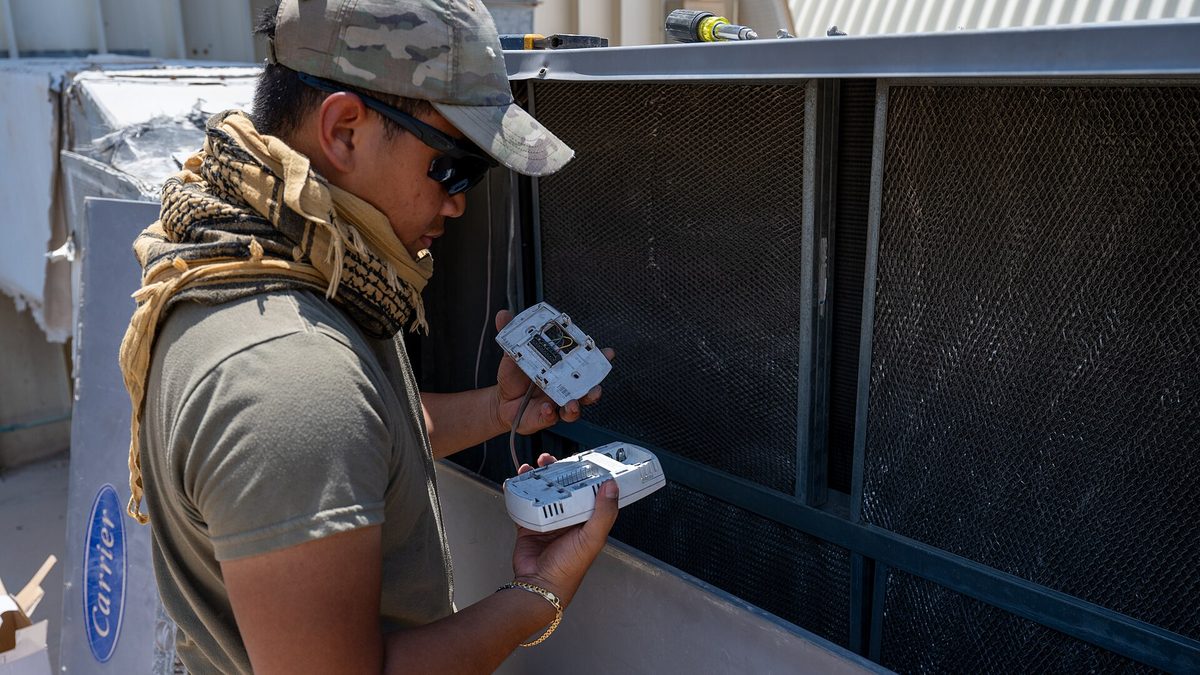
Year one is mostly labor. You will carry material, dig trenches, drill holes, pull wire, and clean up. You will bend a lot of conduit badly before you bend it well. Your pay starts at a percentage of journeyman rate, often around 40 to 50 percent, and rises in steps each year or each thousand hours.
By year two and three you are wiring devices, terminating panels, reading blueprints, and beginning to troubleshoot. This is the stretch where people quit, usually because the pay is still below what they could earn elsewhere while the work has not yet become interesting. Push through it. The pay curve bends upward sharply in the final years and after licensing.
Classroom instruction, typically one or two evenings a week or a block week each quarter, covers electrical theory, the National Electrical Code, blueprint reading, motor controls, and increasingly, fire alarm, data, and photovoltaic systems. Treat it seriously. The license exam at the end is a code exam, and people who coast through classes fail it.
One thing to know: in union construction, you are dispatched to contractors by the local hall. When a project ends, you may be laid off and go back on the out-of-work list until the next dispatch. This is normal and not a mark against you, but it means income can be lumpy. Non-union apprentices typically stay with one contractor throughout, which is steadier but narrower.
Journeyman licensing
Once you complete your hours, you sit the journeyman exam. Licensing in the US is a patchwork. Most states license electricians at state level. A few, including Illinois, Pennsylvania and New York, leave it to cities and counties, so you may need a license for each jurisdiction you work in. Check your state’s licensing board rather than relying on what someone at work tells you.
The exam is open book and code heavy. You will be looking up articles in the National Electrical Code under time pressure, so the skill is knowing where things are, not memorizing them. Tab your code book. Do timed practice exams. Most people who fail run out of time rather than not knowing the answers.
A journeyman license lets you work unsupervised and, in many states, supervise apprentices. It does not let you pull permits or run your own contracting business. That requires the next step.
Master electrician and contractor licensing
A master license typically requires two to four years of documented journeyman experience, then a harder exam covering advanced code, calculations, and often business and law. Masters can design systems, pull permits, and supervise journeymen.
To run a business you usually also need an electrical contractor license, which is separate from the master license in many states and involves insurance, bonding, and sometimes a business exam. The paperwork here is real. Budget for licensing fees, liability insurance, and a vehicle. Plenty of excellent electricians are terrible at estimating and invoicing, and that is what sinks small contractors, not their wiring.
Specializations
Once licensed, the trade splits into several distinct careers.
- Residential wiring for houses and small multifamily. Lighter work, more variety in a day, more customer contact, usually lower pay than commercial.
- Commercial work in offices, retail, schools and hospitals. Larger crews, more conduit, more coordination with other trades.
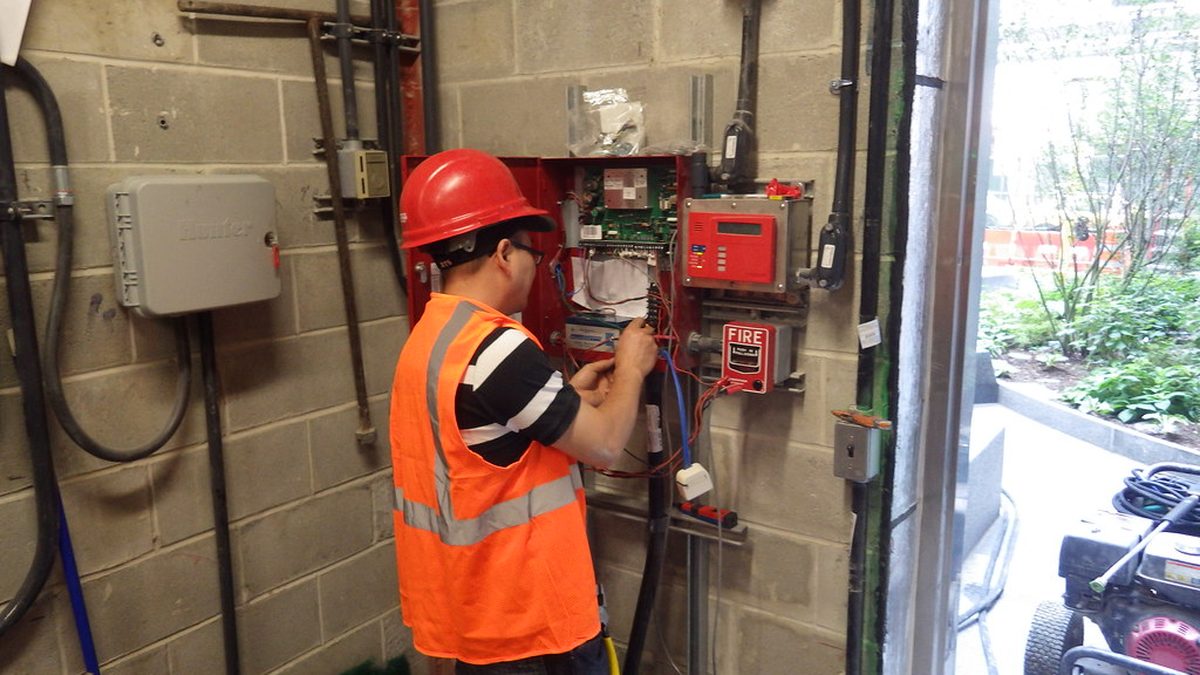
- Industrial electricians work in plants, refineries and manufacturing, on motor controls, programmable logic controllers, and high voltage distribution. Often the best paid and the most technically demanding, with a lot of troubleshooting rather than installation.
- Low voltage covers data, fire alarm, security and audiovisual. Some states license this separately, and it is a common route for people who prefer cleaner work.
- Solar, battery storage and EV charging are the growth areas. Much of the work is standard electrical, but there is enough specialist knowledge that certifications from bodies like the North American Board of Certified Energy Practitioners carry weight.
Linemen, who work on utility distribution lines, are a related but separate trade with their own apprenticeships. If you like the outdoors and heights and want the highest hourly rates, look into it early, because the training route is different.
A working week
The day starts early. Most crews are on site by 6:30 or 7:00 and finished by mid afternoon. You will spend the morning on whatever phase the job is in: rough-in (running conduit and cable before walls close), trim (installing devices and fixtures), or troubleshooting on service calls. There is a lot of walking, a lot of ladder time, and a lot of waiting on other trades.
Service electricians, who go to customers’ homes and businesses to fix problems, have a different week: several short jobs a day, driving between them, diagnosing rather than installing, and dealing with customers directly. It suits people who like variety and dislike big sites.
Overtime is common on commercial jobs with deadlines, and in some regions it is where a good chunk of annual income comes from. In union work it is paid at premium rates. In non-union work, check.
The parts nobody mentions
The pay lags the hype for the first three years. You will read about six-figure electricians. They exist, usually as industrial electricians, foremen, or business owners with fifteen years in. According to the Bureau of Labor Statistics, the median electrician earns comfortably above the median for all occupations, but a first-year apprentice does not, and the gap can sting if you are switching from a job that paid better.
Your body is the tool that wears out. Knees, shoulders and lower back take the punishment. Kneepads, a proper tool belt setup, and not carrying a 12-foot ladder alone when you could ask for help are how people last thirty years instead of fifteen.
Arc flash is the danger people underestimate. Electrocution is the obvious risk. Arc flash, an explosion of energy from a fault, is what causes most severe injuries in the trade. The rules around lockout and personal protective equipment feel tedious until you see what happens when someone skips them.
The code changes every three years. Continuing education is required to keep most licenses. This is not a career where you learn it once.
Job sites have a culture, and it is not for everyone. It is direct, sometimes crude, and slow to accept newcomers. Women and people who do not fit the site stereotype often report that the first year is the hardest part socially, not technically. It does improve, and the better contractors and locals are working on it, but go in with eyes open.
Outside the US
In the UK, the standard route is a Level 3 electrical installation apprenticeship, typically four years, ending with the AM2 practical assessment. You then apply for an Electrotechnical Certification Scheme card, which most sites require. Training centers offering “become an electrician in 12 weeks” courses exist; treat them cautiously, because without site experience and the NVQ, the card you get will limit what you can do.
In Canada, electrician is a Red Seal trade. You register as an apprentice with your province, complete around 9,000 hours (this varies by province) with in-school blocks, then write the interprovincial exam. The Red Seal lets you work anywhere in the country.
In Australia, you complete a Certificate III in Electrotechnology through an apprenticeship, then apply for a state electrical license. Unlicensed electrical work is illegal, which keeps the trade’s value high.
Your first move this week
Find out when the apprenticeship programs in your area next accept applications. Union locals and IEC chapters both publish this, and some only open once a year. If the next window is months away, use the time on algebra and on getting a helper job with a contractor who will register you. If the window is soon, start practicing aptitude test questions now. The test, not the interview, is where most applicants fall out.
This article is general information, not legal, financial or medical advice. Rules differ by country, state and employer; check the current position for your situation. See our editorial policy and disclaimer. Spotted an error? Tell us.